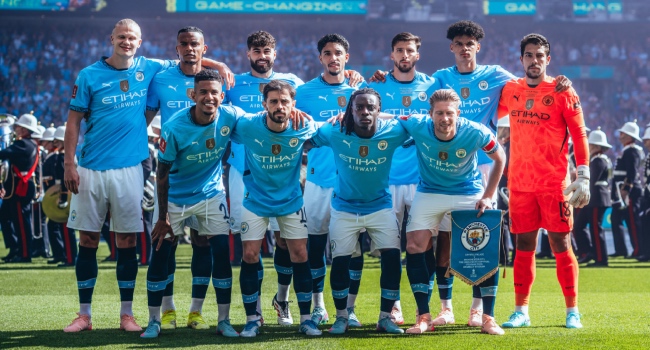
Manchester City's struggles this season took another turn for the worse as Kylian Mbappé's PSG side salvaged a point with a late equalizer, a result that will do little to ease the anxiety surrounding Pep Guardiola's struggling champions. City entered the match needing a win to address mounting fixture congestion and inconsistency, only to see their lead surrendered in the closing stages of what proved a frustrating evening in Paris.
The significance of this draw extends beyond the immediate table standings. City's position at this stage of the season is precarious in a way that would have seemed unthinkable just two seasons ago. Once the benchmark of English football's competitive standards, they now find themselves in a position where every point matters, where dropped draws against direct rivals become particularly painful.
PSG's late goal to equalize represents the kind of resilience that characterizes top European sides. Rather than accepting defeat, Mauricio Pochettino's team pushed forward, maintained attacking intent, and ultimately found the breakthrough that eluded City's tightening defense. It's precisely this mentality that European contenders need to demonstrate when circumstances turn against them.
For Manchester City, the narrative of the season has become one of adaptation and recovery rather than dominance. Injuries have played their part, but so too has a subtle shift in the dynamics of competition. Other clubs have invested heavily, European opponents have studied Guardiola's methods extensively, and City themselves have faced the challenge of maintaining elite levels of performance across multiple competitions simultaneously.
Want AI-Powered Match Predictions?
Get daily tips, AI accumulators and bankroll advice from SportCast.
🚀 Join SportCast VIPThe late concession will sting particularly because City had control of the match for large periods. This is precisely the kind of fixture City would ordinarily expect to win convincingly, demonstrating their superiority through technical excellence and suffocating tactical discipline. Instead, they were made to work for their goal, then watched as their lead evaporated.
As the international break approaches, this draw serves as a reality check. City face crucial weeks ahead where they'll need to reassess their approach, consider tactical adjustments, and identify precisely which elements of their game have deteriorated since their recent period of dominance. Guardiola is undoubtedly among the world's best tactical minds, but even the finest managers occasionally face seasons where external circumstances and competitive parity conspire to produce unexpected results.
PSG, meanwhile, will take considerable satisfaction from the point. Holding a determined City side to a draw away from home represents solid progress for a team still in transition under their current management. For European observers tracking both clubs' form ahead of the knockout stages of Continental competition, this draw has provided useful intelligence about their respective levels of preparation and execution.