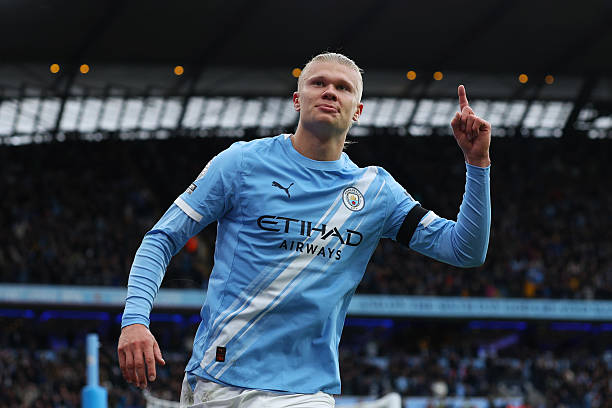
Manchester City's summer transfer business tells a familiar story: the reigning champions have invested heavily in midfield, bringing in high-profile names to maintain their domestic dominance and chase European glory. Yet beneath the celebratory headlines lies a troubling strategic question that could define City's season: in their rush to strengthen the center of the park, have they left Erling Haaland dangerously exposed?
The numbers speak for themselves. City has committed substantial resources to midfield recruitment, signaling Pep Guardiola's belief that the engine room requires reinforcement to compete on multiple fronts. New arrivals represent precisely the type of technically gifted, ball-retaining midfielders who thrive in Guardiola's system. On paper, it looks shrewd. In practice, it raises a critical vulnerability.
Haaland's genius lies in his ruthless efficiency: he doesn't need constant supply, merely precision chances converted with clinical finishing. Yet City's midfield reconstruction may inadvertently reduce the quality and frequency of those opportunities. If the new midfielders require a settling-in period, if their chemistry with existing players takes weeks to develop, then City's most devastating attacking weapon could suffer from inconsistent service during crucial early-season fixtures.
Furthermore, the investment in midfield hasn't been matched by defensive reinforcement around Haaland. City's forward line relies on the entire system functioning cohesively. When defensive stability is assured and midfield creativity flows, Haaland operates in his optimal environment. But a midfield in transition creates tactical vulnerabilities that opposition defenses will eagerly exploit. The Norwegian striker thrives on space and clear passing lanes; uncertainty and false starts limit his effectiveness.
Want AI-Powered Match Predictions?
Get daily tips, AI accumulators and bankroll advice from SportCast.
🚀 Join SportCast VIPCritics point to a recurring pattern in Guardiola's transfer strategy: occasional tunnel vision on specific recruitment targets that leaves other areas under-resourced. This summer appears no exception. While City's new midfielders boast impressive credentials, the collective absence of strategic depth around Haaland—whether additional attacking support or preventative defensive cover—suggests priorities may have been misaligned.
The counterargument holds weight too. Guardiola's infrastructure is so well-established that integration typically proceeds smoothly. City's academy and existing squad depth have frequently compensated for late arrivals and settling-in periods. Perhaps underestimating the manager's ability to rapidly assimilate new talent would be foolish. Yet complacency about Haaland cover isn't afforded to any club, especially one defending a title.
The next six weeks will provide clarity. As fixtures accumulate and the new midfielders gain minutes, patterns will emerge. If City's creativity remains sharp and Haaland's goal tally stays prolific, Guardiola's strategy will be validated. But if early inconsistency costs points and the striker's conversion rate dips due to reduced service, this summer's recruitment decisions may look penny-wise, pound-foolish. For City, that margin between triumph and regret is narrower than most acknowledge.